Center Names 27 Recipients of Graduate Student Grants for 2026
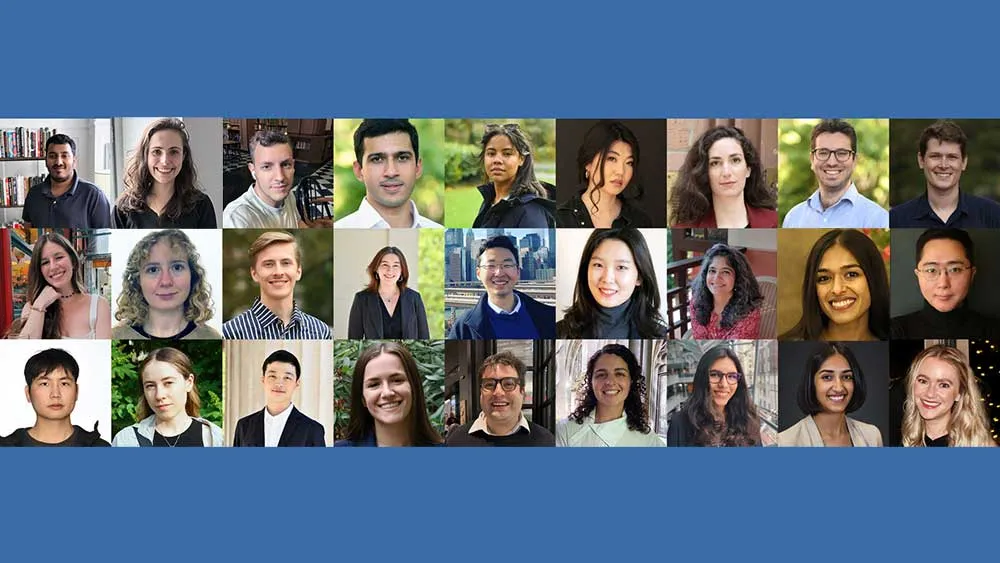
The Center for Political Economy has named 27 recipients of its Graduate Student Grants for 2026. The one-year grants are intended to support research and the generation of new knowledge and networks in the field of political economy.
The Center sought collaborative and multidisciplinary projects — those with the potential to break new ground in understanding the intersections of economics and political and social processes in the U.S. and elsewhere, as well as projects advancing theoretical, conceptual, and methodological innovation.
Center Director David Caughlin called the recipients an exceptionally strong group of students with innovative projects.
“We were grateful to be able to fund such strong projects that incorporate all of the Center’s Idea Lab themes, and which engage in both research focused on the United States as well as research in many countries around the world,” he said.
The topics were organized by the Center’s five Idea Labs – Firms and Industrial Policy, Work and Labor, Money and Finance, Climate and International Political Economy – as well as by the cross-cutting theme of Political Economy and Democracy.
The awards, ranging from $5,000 to $15,000, can be used to purchase data or computing resources; hire research assistants; conduct new research; travel to archives or external academic convenings; and organize workshops and conferences.
This is the third year of the grant program. Read about past winners from the 2024-2025 academic year and the 2025-2026 academic year.
Work and Labor Projects

Nancy Ko
Department of History, GSAS
Title: Absorbent Empire: Free Labor and the Freediver in the Global Aegean, 1840-1956
Nancy Ko’s project, Absorbent Empire, examines the first medically recorded cases of decompression sickness among Aegean sponge divers working in Ottoman and Italian Libya during the age of abolition. It argues that abolition-era labor protections facilitated new, lethal regimes of deep-sea labor through technologies such as the scaphander diving suit, which transformed freediving into a mechanized, debt-driven industry. Despite early medical knowledge of decompression sickness, divers continued to suffer widespread injury and death. By analyzing sponge ecologies, labor relations, and imperial governance, the project reveals how abolition sustained new hierarchies of labor, sovereignty, and historical rights across the Mediterranean world.

Gabrielle Lamont-Dobbin
Management Division, Business School
Title: Clockwork Inequality: Gendered Consequences of When Workers Act
Gabrielle Lamont-Dobbin’s project examines how the timing of claiming legally mandated rights shapes workers’ access to economic protections. Analyzing 1.77 million New York State workers’ compensation claims from 2000 to 2024, Lamont-Dobbin finds that women file claims an average of five days later than men with comparable injuries, accounting for roughly one-quarter of the gender gap in final awards. The project situates this disparity within increasingly worker-initiated administrative systems. To identify the mechanisms behind delayed filing, Lamont-Dobbin proposes original survey research on how gendered workplace power dynamics, including entitlement and fear of retaliation, shape bureaucratic navigation.

Emily Mazo
Department of Sociology, GSAS
Title: Generative AI Tools in the Software Workplace
Emily Mazo’s project examines how generative AI tools are reshaping work, meaning, and autonomy in the U.S. software industry. Drawing on 30 to 50 in-depth interviews and a national survey of software engineers and other highly technical tech workers, the study analyzes how workers engage with generative AI across software production, product integration, and AI tool development. Rather than focusing solely on productivity, the project asks how workers interpret the introduction or imposition of these tools, how daily tasks change, and how technical autonomy is affected. It also investigates when and why workers resist or accept AI adoption. The project contributes to sociological debates on labor process theory, professional autonomy, and control in contemporary workplaces.

Lauri Ojala
Department of Economics, GSAS
Title: Bargaining Decentralization and Rent-Sharing
Collaborator: Akseli Palomäki, Doctoral Student, Department of Economics, GSAS
Lauri Ojala’s project examines how firms negotiate exceptions to sectoral collective bargaining agreements and how bargaining decentralization and employer association membership shape wages, working conditions, and firm performance. Exploiting a recent Finnish reform that expanded eligibility for local bargaining, the study analyzes whether firm-level derogations generate additional rents and how these rents are shared between employers and workers. Using linked administrative and textual data, including sectoral agreements, local bargaining notifications, and employer association records, the project evaluates tradeoffs between wages and job amenities, firms’ adjustment to export-market shocks, and the strategic role of employer associations. The findings offer causal evidence on how collective bargaining structures affect efficiency, equity, and labor market institutions.

Shweta Radhakrishnan
Department of Religion, GSAS
Title: Between Work and Worship: Ritual Possession and Labor in Kerala
Shweta Radhakrishnan’s project examines how ritual possession in Kerala has been reframed through the language of labor, focusing on veḷichappāṭus, or ritual possession specialists. Centered on the formation of the Bhagavathy Komaram Sangham in 2008, the study analyzes how this collective, often described as a trade union, mobilized labor claims such as health insurance and pensions while expanding its work to defend the rights of both oracles and the goddess in social and political arenas. The project investigates what was at stake in redefining possession as work and how labor and worship became intertwined in contemporary Kerala. More broadly, it rethinks the boundaries between religion and labor, and between the secular and the sacred, in modern India.
Firms and Industrial Policy Projects

Nolwenn Allaire
Finance Division, Business School
Title: Government Intervention in Private Equity Markets: Evidence from France
Nolwenn Allaire’s project examines the effects of government intervention in private equity and venture capital markets, focusing on whether public investment fosters entrepreneurship or distorts capital allocation. Using the creation of Bpifrance in 2012 as a natural experiment, the study combines investment and confidential firm-level data to analyze how public co-investment shapes firm growth, innovation, and private investor behavior. Allaire employs event-study and difference-in-differences designs and develops a quantitative model to evaluate trade-offs between state support, capital allocation, and entrepreneurial entry, offering insights into the role of government in shaping innovation and equity markets.

Patrick Farrell
Department of Economics, GSAS
Title: Export Restrictions as Industrial Policy: Evidence from Indonesian Mineral Export Bans
Patrick Farrell’s project studies the industrial policy effects of export restrictions, focusing on Indonesia’s 2009 Mining Law, which limited raw mineral exports to promote domestic processing. Farrell examines how escalating restrictions and bans affected local industries, spurring processing in some sectors while collapsing resource extraction in others, with implications for critical inputs like nickel for green technologies. The project combines empirical analysis of local impacts based on timing and location of restrictions with a theoretical framework to explain these outcomes.
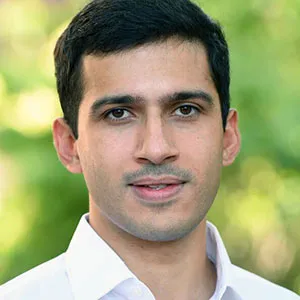
Madhav Malhotra
Economics Division, Business School
Title: Information Frictions in Emerging Market VC: Evidence from India
Madhav Malhotra’s project examines how information frictions shape venture capital financing and startup behavior in India, the second-largest emerging market for venture capital. The study documents distinctive patterns in funding, employment, and firm survival relative to the United States, including lower early-stage investment, higher early spending on signaling activities, and delayed firm outcomes. Malhotra develops a theoretical model of financial contracting under poor observability to show how costly signaling can hinder timely innovation, and empirically investigates the sources of these frictions, including limited investor monitoring, herd behavior, and policy-induced opacity.

Dafne Murillo
Department of Economics, GSAS
Title: Formal-Informal Synergies: Networks, Forbearance, and Firm Outcomes
Dafne Murillo’s project studies the synergies between formal and informal firms in metropolitan Lima, Peru, using transaction-level data from Yape, a widely used digital wallet among micro and small vendors. Murillo constructs firm-to-firm and customer-to-firm payment networks to analyze interactions across formality status, combining platform self-categorizations with a neural network classifier to predict formality for unlabeled firms. To address coverage and measurement error, the project includes a representative survey of 1,000 firms to assess sales conducted via Yape. The study provides new evidence on how digital payment networks link formal and informal sectors and shape firm outcomes.
Money and Finance Projects

Aaron Freedman
Department of History, GSAS
Title: The Securities State: Washington, Wall Street and the Financialization of America, 1979-1992
Aaron Freedman’s project examines how and why Wall Street expanded its role in American economic life during the long 1980s. Focusing on the period from 1979 to 1992, the study traces how the securities industry moved beyond traditional underwriting and brokerage to assume functions once reserved for government, regulated banks, and corporate managers. Through the growth of instruments such as collateralized mortgage obligations, repurchase agreements, and money market mutual funds, Wall Street became central to the provision of retirement savings, corporate finance, and liquidity. Drawing on business and economic history, the project analyzes this shift as a transformation in the American political economy, in which postwar public-private systems of economic security were increasingly supplanted by securities-based finance.

Shawn Park
Finance Division, Business School
Title: Do Governments Manipulate Stock Market?
Shawn Park’s project examines whether governments manipulate stock markets through state-controlled investors. Using transaction-level data from Korea’s National Pension Service, the study tests whether politically influenced portfolio shifts inflate stock prices before elections and reverse afterward. By linking pension fund ownership, trading behavior, and election cycles, the project evaluates whether political ownership distorts market outcomes for electoral advantage.

Shuwen Wang
Finance Division, Business School
Title: The state-contingent bank-nonbank relationship
Shuwen Wang’s project examines how the relationship between bank and nonbank credit varies across the business cycle. Using Federal Reserve From-Whom-to-Whom data from 1980 to 2025, Wang shows that nonbank credit substitutes for bank lending during expansions but contracts alongside banks during downturns. The project documents an asymmetric cross-funding channel in which nonbank funding crowds out bank lending, while bank funding inflows boost nonbank activity. By tracing funding sources and assessing effects on credit allocation and financing costs, the study sheds light on the state-dependent architecture of modern credit intermediation and its implications for regulation and financial stability.
Political Economy of Climate Projects

Clara Berestycki
Sustainable Development Program, SIPA
Title: Cost of Wildfire Smoke: A Revealed Preferences Approach
Clara Berestycki’s project estimates the costs of behavioral adaptation to wildfire smoke using a revealed preferences approach. Leveraging high-resolution smartphone mobility data from California’s 2018 wildfire season, the study measures individuals’ willingness to pay to avoid smoke exposure by analyzing changes in work, home, and outdoor travel. The project explores heterogeneity across political and socioeconomic groups and develops a structural framework to estimate the total costs associated with responses to wildfire smoke. The findings aim to inform how behavioral adaptation shapes the health and economic impacts of wildfire smoke.

Seung Min Kim
Sustainable Development Program, SIPA
Title: Firm Ownership and Pollution: Evidence from Space
Seung Min Kim’s project examines how ownership of fossil fuel power plants affects local pollution and environmental justice in the United States. Focusing on the shift from publicly listed utilities to private equity ownership, the study tests whether shorter investment horizons and weaker disclosure requirements alter incentives for pollution abatement. Using satellite imagery to measure ambient pollution and linking it to detailed ownership data, Kim provides causal evidence on how acquisitions affect air quality, plant behavior, and nearby communities. The project combines event study methods with a theoretical model to assess how ownership incentives interact with environmental regulation.

Meha Sadasivam
Finance Division, Business School
Title: Financing Adaptation Infrastructure
Meha Sadasivam’s project studies how financing constraints shape the construction and maintenance of flood-protection levees in Louisiana and how these decisions affect housing markets, employment, and local growth. The project quantifies how revenue volatility, debt access, and tax election outcomes influence levee quality, estimates the causal impacts of improved protection on economic outcomes, and develops a policy model that incorporates financing frictions, risk, timing, and spillovers. The findings aim to inform optimal funding strategies for climate adaptation infrastructure and provide actionable guidance for local and state policymakers.

Max Zahrah
Sustainable Development Program, SIPA
Title: Shifting Landscapes and Ecosystems: The Cost of Adaptation for Indigenous Arctic Communities
Max Zahrah’s project quantifies the adaptation costs faced by Indigenous Arctic communities confronting rapid ecological change. Focusing on subsistence economies among groups such as the Alaskan Iñupiat, the study documents how environmental disruptions affect food access, expenditures, and adaptation decisions. Using original household surveys combined with data on food prices, transportation costs, and climate conditions, Zahrah analyzes how reliance on costly imported foods and migration to urban labor markets function as adaptation strategies. The project highlights adaptation costs overlooked by aggregate climate impact estimates and centers Indigenous experiences outside formal markets.
International Political Economy Projects
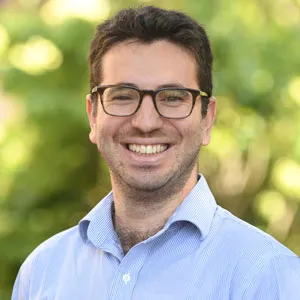
Patricio Goldstein
Department of Economics, GSAS
Title: Geoconomics of Sovereign Debt
Collaborator: Nicholas Zevanove, Doctoral Student, Department of Economics, GSAS
Patricio Goldstein’s project examines the geoeconomics of sovereign debt, focusing on the political economy of official (bilateral and multilateral) lending to emerging markets. The project develops a theoretical framework embedding foreign policy concessions into debt contracts to analyze how geopolitical preferences shape lending strategies, debt capacity, and borrower welfare. It also constructs a novel dataset linking official debt allocations to political concessions using text analysis of treaties, speeches, and news. Together, the study evaluates the extent to which sovereign borrowing costs and access are driven by geopolitical alignment versus economic fundamentals, offering new conceptual insights and empirical tools for global finance research.

Samantha Mussell
Department of Political Science, GSAS
Title: Soften the Blow: How Soft Power Offsets the Costs of Protectionism
Collaborator: Samuel Chan, Doctoral Student, Department of Political Science, GSAS
Samantha Mussell’s project investigates whether a country’s soft power can offset the costs of protectionism for international firms.

The study examines whether highlighting favorable country cues in product marketing helps consumers pay premiums for foreign goods despite tariffs and trade barriers. Using NielsenIQ retail data, survey experiments, and an online Amazon field experiment, Mussell and Chan analyze how consumer perceptions shaped by soft power influence price competitiveness and purchasing behavior, offering insights into the intersection of culture, diplomacy, and international trade.

Kate Reeve
Department of History, GSAS
Title: Living Possession: Indigenous Property in the Settler Empire
Kate Reeve’s project examines how Indigenous property was reshaped under nineteenth-century settler colonial regimes in Australia, Canada, and New Zealand. Focusing on Crown land policies from 1850 to 1915, the study explores how colonization and legal reforms transformed Indigenous ownership rather than eliminating it, producing new forms of property and legal personhood. By analyzing the interplay of English common law, colonial legislation, Indigenous resistance, and international capital flows, Reeve highlights how law, economy, and sovereignty interacted to create complex tenurial outcomes in the British settler empire.

Simran Singh
Department of Political Science, GSAS
Title: Private Pocketbooks for Public Goods: State Policy Delegation to Firms
Simran Singh’s project examines how and why firms provide local public goods strategically. Singh analyzes how firms use social spending, especially place-based investments in visible public goods, to embed themselves in the communities where they operate, building local constituencies with a stake in the firm’s continued presence. This embeddedness makes firm exit politically costly for policymakers, strengthening firms’ bargaining leverage and increasing the likelihood of extracting concessions from the state, such as subsidies. Using a novel dataset of roughly 500,000 CSR projects by more than 47,000 firms since 2014 and leveraging exogenous commodity price shocks that raise firms’ reliance on the state, the project combines quantitative analysis with interviews of bureaucrats and corporate executives to examine the strategic interactions between states and firms that underlie social development.

Sydney White
Department of Political Science, GSAS
Title: Linking Asset-Based and Narrative Accounts of Financial Crises: France, UK, and US from 1870-1945
Sydney White’s project links asset-based and narrative accounts of financial crises in France, the UK, and the US from 1870 to 1945. Combining formal models of narrative adoption with computational analysis of historical texts and images, the study examines how financial narratives shaped political responses to crises, explaining why some shocks triggered mass realignment while others did not. By integrating narrative and asset-based perspectives, White develops new methods to measure the evolution of financial and political stories, bringing narratives to the forefront of international political economy research.

Hekang Yang
Department of East Asian Languages and Cultures, GSAS
Title: Reinventing Frontier Commerce: China, Russia, and the World Economy, 1805–1911
Hekang Yang’s project examines Sino-Russian trade and frontier commerce from 1805 to 1911, focusing on how imperial statecraft, fiscal reform, and migration shaped overland trade across Central Asia, Siberia, Manchuria, and the Russian Far East. Tracing the shift from the barter-based Kyakhta system to the treaty-port era, the project analyzes China’s integration into the nineteenth-century global economy and emerging Eurasian economic interdependence. Funds will support archival research, conference presentations, journal submissions, and the development of a monograph, as well as groundwork for an interdisciplinary workshop on Sino-Russian imperial frontiers.
Political Economy and Democracy Projects

Kirill Chmel
Department of Political Science, GSAS
Title: Waves of Resistance: Media and Identity Preservation in the Making of Republican Turkey
Kirill Chmel’s project studies how Kurdish communities preserved their cultural identity under assimilationist policies in twentieth-century Turkey. Focusing on Kurdish-language radio broadcasts from Armenia (1950s–1980s), the project examines how non-political media reinforced identity and shaped state assimilation strategies. Using geospatial modeling, archival research, natural language processing, and survey data, Chmel links media exposure to cultural resilience and state responses, showing how evolving media environments empower minorities and influence nation-building dynamics.

Isabelle Grant
Department of History, GSAS
Title: White Terror, Federal Enforcement, and the Fight for Multiracial Democracy in the Postbellum South
Isabelle Grant’s project examines how the federal government enforced the Reconstruction Amendments through the Enforcement Acts to combat white terrorism in the postbellum South. Using underutilized sources — including Department of Justice records and the papers of key officials — Grant investigates how prosecutors selected defendants, crafted strategies, and adapted arguments across states from 1870 to 1875. The project recovers a broader and more nuanced history of federal anti-Klan enforcement, moving beyond the usual focus on South Carolina trials to illuminate patterns of political violence, legal intervention, and multiracial democracy.

Patrick Liu
Department of Political Science, GSAS
Title: Forgive and Forget: The Elusive Electoral Returns to Student Debt Cancellation
Patrick Liu’s project investigates whether Biden-era student loan forgiveness policies generated electoral gains for Democrats in the 2024 presidential election. Using exogenous variation in the timing of loan cancellations, Liu examines causal effects on voter turnout, political donations, and vote choice, linking administrative credit panel data from TransUnion with voter and FEC records. The study addresses how voters connect concrete economic gains to electoral decisions, exploring why a major policy — $188 billion canceled for over five million borrowers — may not have produced measurable political returns. By disentangling factors such as misperceptions, elite discourse, policy design, and voter behavior, Liu contributes to scholarship on political economy, policy feedback, and democratic accountability.

Madison Ogletree
Department of History, GSAS
Title: A Peculiar Freedom: Law, Free People of Color, and the Making of the Old South, 1790-1860
Madison Ogletree’s project examines how law shaped the lives of free people of color in the antebellum South. Arguing that freedom under slavery was local, conditional, and deeply constrained, the project shows how state and county laws produced a form of “freedom without independence.” Using census, land, and tax records, Ogletree maps settlement patterns of free people of color in three rural Southern counties to reconstruct the spatial dimensions of daily life. Court records on apprenticeship and guardianship reveal how legal systems surveilled and controlled free Afro-Americans, binding them to white patrons and guardians. The project highlights how free people of color navigated these constraints through dense social relationships, challenging portrayals of them as either outside slavery or simply “slaves without masters.”

Abhyudaya Tyagi
Department of Political Science, GSAS
Title: The Roots of Captured Democracy: Why Do Informed Voters and Politicians Allow Elite Capture?
Abhyudaya Tyagi’s project examines how economic elites build and sustain political power in democracies, focusing on when and why elite capture persists despite informed voters. Using contemporary India as a case study, the project combines fieldwork and survey experiments to study how elites use nationalist and pro-social narratives to reduce backlash against policies such as forced land acquisition. Tyagi also develops a subnational measure of elite capture by comparing corporate land compensation to market prices, testing how alignment among economic and ideological elites facilitates coordinated capture of democratic institutions.