Center Selects 12 Projects to Fund With 2026-2027 Faculty Grants
The projects are led by a dozen Columbia faculty and involve another 19 faculty and research scholars from around the world.
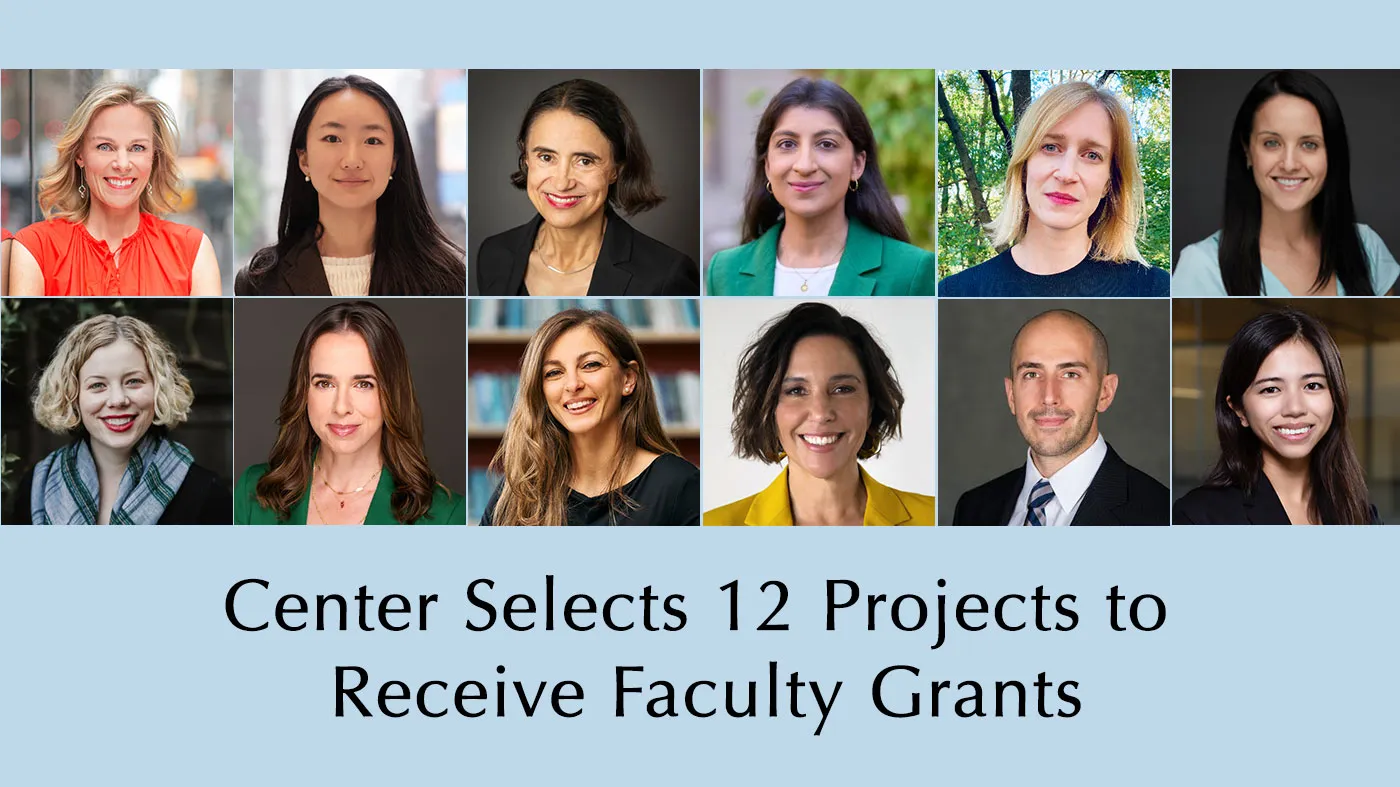
The Center for Political Economy has selected 12 projects to receive funding from the 2026-2027 faculty grants program.
Center faculty grants support the generation of new knowledge and networks, facilitate the exchange of discoveries, accelerate the identification of key challenges, and expand the methods scholars use in their research. This year’s grant recipients will lead projects that align with three of the Center’s Idea Labs, which mobilize intellectual resources around the following themes: Firms and Industrial Policy; Work and Labor; and Money and Finance. The Center has two other idea labs – Political Economy of Climate and International Political Economy – along with a theme on Political Economy of Democracy.
The winning projects are led by colleagues from multiple disciplines and schools on campus, including the Graduate School of Arts and Sciences, Barnard College, the Business School, the Law School, the Climate School, the School of International and Public Affairs, Mailman School of Public Health, and Teachers College. They include the following:
Migrant Enclaves and Integration: Evidence from Randomized Public Housing Assignment

Gemma Dipoppa, assistant professor of political science, Graduate School of Arts and Sciences
Collaborators:
- Nadia Campaniello, associate professor of economics, Department of Economics, Social Studies, Applied Mathematics and Statistics, University of Turin, Italy;
- Mariele Macaluso, postdoctoral researcher, Department of Economics, Social Studies, Applied Mathematics and Statistics, University of Turin, Italy
A central question in migration research is whether living among co-ethnics helps migrants integrate faster, by providing social support, information, and access to jobs, or whether it hinders integration by limiting contact with natives and weakening engagement with public institutions. Existing evidence remains limited and concentrated largely on refugees and asylum seekers, even though labor and family migrants make up a much larger share of immigrant populations in advanced democracies.
Dipoppa's research project addresses this question using novel administrative panel data covering 30,000 public-housing tenants in the province of Turin, Italy, observed from 2002 to 2025. Because assignment to public housing allows only limited choice, individual assignment to projects with varying shares of migrant residents is effectively random, creating exogenous variation in exposure to co-ethnic versus native neighbors. Exploiting this natural experiment, Dipoppa's team estimates the causal effects of building- and complex-level migrant concentration on economic and social integration, as well as on engagement with public institutions.
Shaping Female-Friendly Workplaces: The Role of Women’s Representation in Collective Bargaining

Ashley Wong, assistant professor of economics, Barnard College
Collaborators:
- Mery Ferrando, assistant professor of economics, Tilburg University;
- Sabrina Genz, assistant professor of economics, Utrecht University;
- Emilie Rademakers, assistant professor of economics, Utrecht University;
- Anna Salomons, professor of economics, Tilburg University;
- Francesca Truffa, assistant professor of business economics and public policy, University of Michigan Ross School of Business
Collective labor agreements shape wages, benefits, and working conditions for millions of workers. Yet, little is known about whether the composition of bargaining teams affects the policies they negotiate.
This project investigates whether the representation of women in bargaining teams influences bargaining outcomes, workplace equality, safety, and employee well-being. To do so, Wong’s team will compile a novel dataset linking negotiator biographies, collective agreements, and administrative employer-employee records from Statistics Netherlands from 2006–2025.
Data on negotiator backgrounds will be supplemented with online CV records from Revelio Labs. By comparing negotiations with different shares of female negotiators, Wong’s team will study whether gender composition affects negotiated provisions such as flexible work arrangements, parental leave, and policies against workplace harassment, and will then examine whether these provisions translate into labor market outcomes, including gender pay gaps and promotions, and broader outcomes such as the prevalence of workplace harassment and workforce mental well-being.
This project will produce the first systematic evidence on how representation within bargaining teams shapes workplace policies and worker outcomes, contributing to debates on gender equality, labor institutions, and organizational decision-making.
Does organizational capacity-building improve firms’ safety culture? Evidence from the Nirapon Safety Management Program in Bangladesh

Laura Boudreau, associate professor of economics, Columbia Business School
Collaborators:
- Sakib Mahmood, assistant professor, BRAC University, research fellow, BRAC Institute of Governance and Development, BRAC University, Bangladesh;
- Madhuri Vempati, PhD student, Department of Economics, Columbia University
In many low-income countries, the conventional pillars of workplace protection - unions, labor inspectorates, legal enforcement - are largely absent, leaving workers with little recourse and firms with few external pressures to improve occupational safety and health (OSH). This makes capacity-building interventions by international buyers and actors such as the ILO critical but underexplored instruments of firm-level OSH upgrading.
To study such an intervention, Boudreau’s team plans to conduct a randomized controlled trial among 420 garment manufacturers across 329 locations in Bangladesh participating in a buyer-driven Safety Management Program provided by the NGO Nirapon, cross-randomizing the timing of Safety Support Visits (SSVs) – onsite assessments that guide technical managers on identifying and remediating safety risks – and OSH training of managers and workers. The team’s conceptual framework draws on relational contracting theory to distinguish among three barriers to OSH adoption (Gibbons and Henderson, 2011): weak incentives, limited information, and limited capability to sustain informal agreements between management and workers.
Boudreau’s team hypothesizes that SSVs provide the information needed to institutionalize OSH, while training strengthens the shared knowledge and credibility required for relational contracting. If both barriers bind simultaneously, the joint treatment should outperform either intervention alone. Primary outcomes include factories' safety management systems, safety culture, safety performance, and business competitiveness.
Corporate Charters and the Public Interest: Revisiting 19th-Century Anti-Monopoly Law
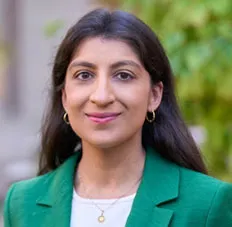
Lina Khan, associate professor of law, Columbia Law School
Collaborator:
- Shaoul Sussman, founding partner at Simonsen Sussman LLP and Senior Advisor at Columbia Law School
This project examines how 19th-century American law used corporate charters as tools for anti-monopoly regulation and industrial policy, challenging the common narrative of unchecked laissez-faire capitalism during this period of rapid industrialization. Unlike today, corporations were not understood only as private contracts among shareholders, but rather as public grants with privileges bestowed by the state to achieve specific public-private goals.
Two primary constitutional pillars shaped this system from the 1780s until the 1880s: the Contracts Clause, which bound corporations to specific purposes and served as a check against abuse, and the Commerce Clause, which, following Gibbons v. Ogden, inadvertently enabled the rise of ""robber barons"" by creating a regulatory vacuum in interstate commerce.
The project identifies four types of anti-monopoly litigation during this period: competitor-led, shareholder-led, corporate-led, and state-led suits. It also challenges the assumption that large, integrated firms were necessary or played a meaningful role in industrial progress during the period. Instead, it explores the decentralized network of small, specialized corporations that powered the Union's Civil War effort prior to the rise of trusts and the emergence of the Gilded Age.
Using Musk v. OpenAI as a contemporary lens, the research advocates for reviving strict corporate purpose constraints and capital limits as a historically grounded framework to combat modern corporate concentration.
Regionalism and the Federal Reserve

Kathryn Judge, Harvey J. Goldschmid Professor of Law, Columbia Law School
Judge’s project uses the Federal Reserve Bank as a case study in the ways regionalism can enhance agency accountability and independence in an era of growing executive power. The project is focused on the federal reserve, and its distinct design and history, but with an eye toward developing a model for how the federal government might yet undertake ambitious projects without handing excessive power to the president.
The structure of the federal reserve system makes it unique among federal agencies. At the apex sits a seven-member board of governors. Fed governors enjoy exceptionally long 14-year statutory terms, but the board generally looks a lot like other once-independent agencies. Yet most of the Fed's activities and operations are carried about by 12 Federal Reserve Banks, scattered across the country, with a governance structure that blends board appointees with industrial leaders and bankers chosen by member banks.
The Fed’s most important decisions, those involving monetary policy, are made by the Federal Open Market Committee, which includes all seven presidentially appointed governors and five (of the 12) reserve bank presidents. Viewed in isolation, the reserve banks represent a democratic deficit. As part of the committee and federal reserve system, however, they can help promote accountability, facilitate congressional oversight and generate new and sometimes heterodox ideas.
The project will examine the myriad benefits and drawbacks of the Fed's unusual structure by examining the various roles that they played between 1935, when Congress gave the Fed its current form, and the mid-1950s, when the Fed achieved independence.
The Political Economy of Climate Internationalism: NGOs, Philanthropies, and the Origins of the International Climate Regime, 1979–1992

Leah Aronowsky, assistant professor of climate, Columbia Climate School
This project supports the completion of a book-length study of the political economy of climate governance from the late 1970s through the early 1990s. It argues that, in the 1970s, when politics in the United States were dominated by popular demands for continued access to cheap, abundant energy and when poverty reduction and unfettered, fossil-fueled economic growth were key demands of the Global South in the international realm, an international climate politics organized around prevention was perceived as effectively foreclosed.
Only over the course of the 1980s, as new ideas about the compatibility of environmental protection and economic growth displaced the fossil-fuel-centered debates that had defined the previous decade, did prevention become widely construed as a feasible goal for climate politics. US-based NGOs and philanthropic foundations played a central role in this transformation, supporting efforts to develop an international scientific and political consensus and recasting climate action as a matter of long-term universal concern rather than competing national interests.
In focusing on the role of civil society actors in the history of climate politics, the project offers a new account of how the international climate regime as we know it today first took shape. At a moment of widespread disappointment about the lack of progress made in addressing climate change, a history of how and why prevention was deemed politically possible in the first place is timely.
Climate policies, agribusiness and far-right vote in Europe and Latin America
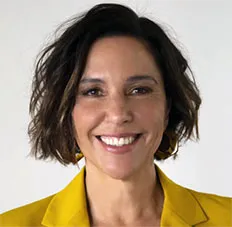
Daniela Campello, Edward Larocque Tinker Visiting Professor, School of International and Public Affairs
Collaborators:
- Catherine De Vries, vice dean at the IE School of Politics, Economics & Global Affairs;
- Paula Rettl, assistant professor, Harvard Business School;
- Simone Cremaschi, departmental lecturer in comparative european politics at University of Oxford’s Department of Politics and International Relations.
Agriculture is highly vulnerable to climate change while also constituting a major source of greenhouse gas emissions. In Brazil, nearly two-thirds of emissions come from agriculture, forestry, and land use. In some European countries, these sectors account for as much as one-quarter of total emissions, while in countries such as the Netherlands, agricultural methane emissions remain a major threat to biodiversity. This project examines how agribusiness stakeholders are mobilizing politically in response to increasingly stringent environmental policies and the adverse effects of climate change on agricultural production. These responses are becoming especially consequential as the EU–Mercosur agreement deepens trade integration while intensifying conflicts over environmental standards, agricultural competitiveness, and market access.
Because ambitious climate policies require public support and electoral backing, understanding their political foundations is essential to making environmental regulation both effective and durable. The project addresses three questions: How are agricultural producers responding to pressure to adopt sustainable practices? How are political parties, particularly those on the far right, incorporating and mobilizing farmers’ demands? And under what conditions can domestic and transnational pressures bridge the divide between environmental objectives and agrarian interests?
Comparing Brazil, Germany, and the Netherlands provides a particularly useful setting for examining these dynamics. Agricultural producers in these countries are connected through international trade and global value chains, which transmit environmental, regulatory, and market pressures across borders. Yet the political effects of these pressures depend on domestic institutions, producer organizations, party competition, and conflicts over development. Brazilian producers often portray European environmental requirements as disguised protectionism, while European farmers argue that stricter domestic regulation and increased competition from Mercosur may shift production toward countries with weaker standards. Environmental organizations, in turn, question whether deeper trade integration can be reconciled with effective protections against deforestation and biodiversity loss.
By tracing how these interconnected pressures are interpreted and mobilized across distinct political settings, the project seeks to explain why international economic integration sometimes facilitates climate action but, under other conditions, reinforces agrarian resistance and political backlash.
Faith, Money, and Climate Politics: Evidence on Countering Climate Denial in U.S. Evangelical Communities

Zoey Zhou, assistant professor of climate, Columbia Climate School
Collaborators:
- Robert Metcalfe, professor of international and public affairs, School of International and Public Affairs;
- Eyub Yege, assistant professor of finance, Hong Kong University of Science and Technology;
- Fanyu Wang, PhD candidate in sustainable development, Columbia University
Zhou's project investigates how moral authority, credibility, and incentives shape climate beliefs and behavior within communities where skepticism runs deep despite significant political influence. Through a large-scale survey, the project explores what drives climate skepticism and which approaches are most likely to shift beliefs and build support for policy change. The findings aim to inform more effective strategies for building climate consensus across politically diverse communities.
From Twilight to Renewal: America, Europe, and the Future of the West

Anu Bradford, Henry L. Moses Professor of Law and International Organization, Columbia Law School
The United States and Europe are at the crossroads, reorienting their economies, overhauling their political institutions, and even reconstructing their values and identities. The Transatlantic relationship is also undergoing a profound transformation. A deep and destabilizing rift has emerged between the two, calling into question whether “the West” still exists, either as a political and ideological construct or as a strategic actor with shared values and interests.
Bradford plans to write a book to examine these transformations. This book anchors its narrative in the current, turbulent political era. But the heart of the book takes a step back from the current events and compares American and European economies, societies, and cultural identities. It discusses the European and American respective approaches to economic opportunity and equality; education and universities; diversity and immigration; the role of the state and the trust in markets; innovation and entrepreneurship; political institutions and democratic processes, and foreign policy and alliances.
It traces those differences to either law, history, religion, politics, culture, or values. The book then examines how — despite the rather foundational nature of those differences — Europeans and Americans traditionally viewed each other as partners and allies, bound by seemingly shared values and geopolitical interests. And, for that alliance to now rupture, the book asks if it was because America, Europe, or the world that changed.
This discussion sets the stage for the critical question of whether the Transatlantic relationship is permanently broken and whether and how trust between the two former allies could be rebuilt.
Political Ideology and Parent Preferences under School Choice

Kirsten Mumma, assistant professor of economics and education, Teachers College
Collaborator:
- Blake Heller, assistant professor of public policy, Hobby School of Public Policy, University of Houston
Contemporary American society is characterized by pervasive, pernicious, and deepening political polarization. Public schools have not been immune to these forces. Locally controlled public schools – our “ten thousand democracies” (Berkman, 2005) – have become key battlegrounds in contemporary culture wars and public opinion on education issues has grown sharply partisan (Kogan, 2025; Houston, 2024).
At the same time, dissatisfaction with public schools and prevailing political conditions have facilitated the dramatic expansion of private school choice programs, enabling and subsidizing families who opt out of these public institutions altogether. A striking instance of this is the $1 billion Education Freedom Savings Account program that will launch in Texas this fall. This research project will examine the intersection between these two important forces in education politics by assessing the role of political ideology in school choice systems.
There are two primary specific aims for this research: (1) to identify whether parent preferences for schools are influenced by markers of political ideology; and (2) to assess the extent to which schools competing for parents appeal to political ideologies in public-facing materials.
The first specific aim will be addressed through a conjoint survey experiment in which respondents will evaluate hypothetical school profiles that randomly vary school attributes, including signals of school/community political leanings. The second specific aim will be addressed by scraping data from public, charter, and private school websites in Texas and coding content for political cues.
The Political Economy of Private Standards and the “Language of Medicine”

Miriam J. Laugesen, PhD, associate professor, Department of Health Policy and Management, Mailman School of Public Health
Collaborator:
- Alexander Borsa, PhD, research scientist, Department of Health Policy and Management, Mailman School of Public Health
This project examines how privately governed standards shape public policy, using the Current Procedural Terminology (CPT®) billing code system as a case study. Developed and maintained by the American Medical Association, CPT provides a common framework for defining and billing clinical, laboratory, digital health, and AI-enabled services across Medicare, Medicaid, private insurance, veterans’ health programs, and workers’ compensation.
The U.S. model differs from those used in many peer countries, where procedural classification systems are often administered by public bodies or aligned with international systems. As a privately managed standard embedded in public and private payment systems, CPT offers an important lens for understanding how technical classifications are developed, maintained, and incorporated into public policy—particularly as they increasingly influence how new technologies are recognized, evaluated, and reimbursed.
Building on theories and research on standards-setting, the project will trace CPT’s historical development and integration into the U.S. health care system. It will examine transparency and stakeholder participation in CPT governance and compare the U.S. model with procedural classification systems in Germany, France, Japan, and Australia.
The project will produce a scholarly article on CPT’s historical development, a comparative paper based on expert interviews, and a network-building workshop to develop a shared research agenda on the governance of payment systems and technical standards in public programs.
Learning from the Lie: What Do Voters Infer from Anti-Democratic Proposals?

Carlo Prato, associate professor of Political Science, Graduate School of Arts and Sciences
Collaborators:
- Daniel B. Markovits, Postdoctoral Fellow, Kellogg School of Management, Northwestern University;
- Patrick Liu, PhD candidate, Graduate School of Arts and Sciences, Department of Political Science
Despite widespread public opposition to attacks on democratic norms, candidates who embrace election denial, partisan gerrymandering, and executive overreach secure nominations for major parties and win elections. Why? We propose an explanation rooted in informational scarcity: voters may use anti-democratic behavior to draw inferences about candidates' policy commitments and willingness to overcome institutional constraints. If voters infer that norm-violating candidates hold less ambiguous policy preferences or possess greater resolve, anti-democratic positions may generate electoral rewards even when voters are intrinsically supportive of democratic principles.
This expectation is particularly strong in low-information environments, such as primary elections. Prato’s team has developed a formal model of voter learning that characterizes how voters’ opinions about a candidate's policy positions and resolve upon observing anti-democratic proposals depends on their ideology and their pre-existing information. The team has completed one experiment demonstrating that voters infer positions on abortion, tariffs, and bipartisan cooperation from candidates' stances on election fraud claims — and that inferences diminish when additional policy information is provided, in line with the theory’s predictions. The second experiment, which will examine a broader range of anti-democratic behaviors, is in progress. With CPE support, this research will be extended through a voter-file–matched survey of validated primary voters. While most existing studies use hypothetical elections, this phase will assess how actual primary voters respond to information about real-world candidates.