Center Welcomes Eight 2025-2026 Postdoctoral Research Scholars
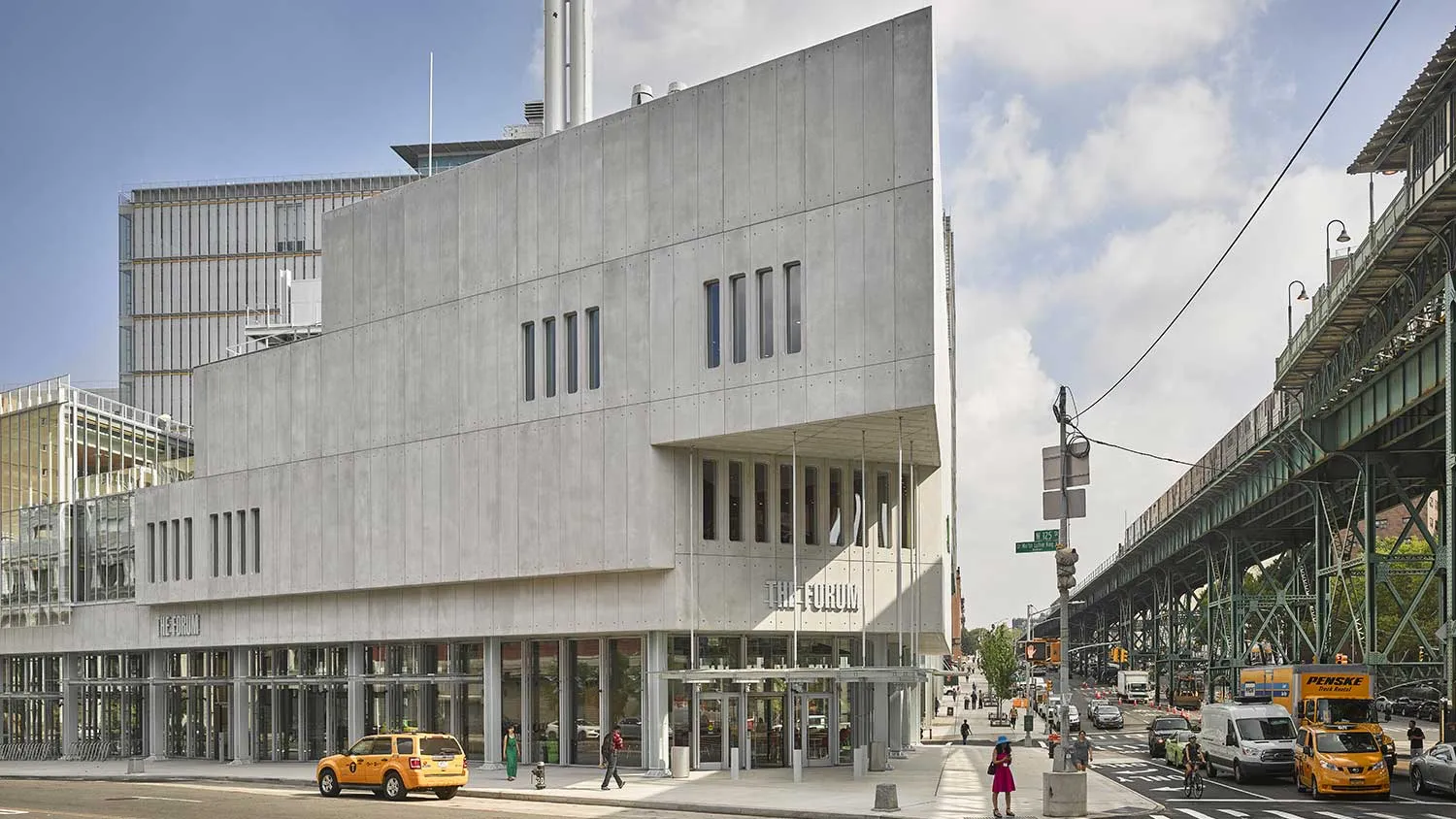
The Center for Political Economy has selected its 2025-2026 Postdoctoral Research Scholars.
This summer, the Center welcomed six new research scholars across the following Idea Labs: Firms and Industrial Policy, Money and Finance, Political Economy of Climate, and Work and Labor.
These scholars include Luis Jaramillo, Jacob Swanson, Johnathan Guy, Emma (Tristan) Du Puy, Shannon Potter, and Aiko Schmeisser.
In additional, the Center welcomed Nils Kupzok and Dario Laudati for a second year of residency. Learn more about the scholars below.
The Center’s Postdoctoral Research Scholar program is intended to provide early-career scholars with time to undertake research and/or writing for projects that will make substantial and original contributions to the understanding of political economy. This year, each lab has two postdoctoral fellows whose time is divided between their own research and the lab’s explorations and activities.
Firms and Industrial Policy Idea Lab

Luis Jaramillo
Luis studies how trade and industrial policy shapes productive development in developing countries, East Asia and Latin America in particular. He will use the fellowship to complete two research projects. In the first one, he studies how South Korea’s first “mission-oriented” R&D program shaped innovation and real outcomes after its implementation between 1992 and 2001. Unlike most work in this area, the setting features a large, government-directed R&D funding shock akin to the United States’ CHIPS and Science Act. In the second one, which is joint work with Melissa Dell and Pablo Querubín, he studies when and how trade barriers either foster or hinder long-term economic development. He does so through a comparative analysis of trade policy and 20th-century development in Mexico, Taiwan, and mainland China. Looking to shed light on how political economy shapes infant industry protection, the project exploits that while in Mexico the single party state deeply entwined with economic interests, most mainland industrialists moved to Hong Kong and severed ties with the KMT after its retreat to Taiwan, likely removing pressure to skew trade protection towards existing industries.

Nils Kupzok
Nils Kupzok is a political economist working on green industrial, fiscal, and monetary policies. He is currently building a dataset of green fiscal spending across the OECD to explain why some countries spend more on decarbonization than others. So far, Nils’ research has been published in leading political science journals, including an article on the role of industry in the rise of policies like the US’ Inflation Reduction Act, the EU’s Green Deal, or the German Climate Fund. Nils has received several awards, including the Emerging Scholar Policy Prize from Perry World House and Foreign Affairs. Nils received a PhD from Johns Hopkins University's Department of Political Science in 2022 and has been a Postdoc at Johns Hopkins' School of Advanced International Studies in Washington D.C. since then. Please visit his homepage for more detailed information or follow him on twitter or bluesky.
The Decarbonization Bargain: How the Decarbonizable Sector Shapes Climate Politics
Money and Finance Idea Lab
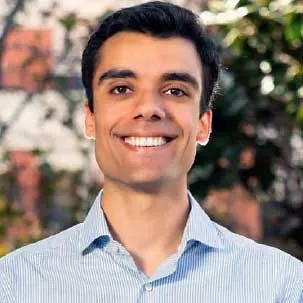
Dario Laudati
Dario Laudati received his PhD in Economics from the University of Southern California. He holds a Bachelor's degree in Economics from Bocconi University (Italy), and a Joint Master's degree in Economics from Bocconi and Université Catholique de Louvain (Belgium). He is primarily interested in the interconnections between macroeconomics and finance, and in international macro. During his PhD, he conducted studies on wealth inequality in the U.S., geographic inequality in Italy, and the effect of sanctions on the Iranian economy. Dario is joining the Money and Finance Lab to work on the links between banking competition, lobbying, and financial deregulation in the U.S., among others. Additional information about Dario’s research can be found on his website.

Jacob Swanson
Jacob Swanson received his PhD in Government from Cornell University. A political theorist, his research focuses on political economy, democracy, and social theory. At the Center for Political Economy (Money and Finance Lab), he will primarily be working on completing his book, "Made By Money: Politics, Economics, and the Self in Capitalist Modernity," which explores how money shapes the modern economic self, markets, and democratic life. His previous work has appeared in Political Theory, Daedalus, Perspectives on Politics, and the UCLA Criminal Justice Law Review.
Political Economy of Climate Lab

Johnathan Guy
Johnathan Guy is a postdoctoral research scholar in the Political Economy of Climate Lab at Columbia University. His research focuses on the comparative politics of energy and climate change, particularly in resource-rich patronage democracies. His ongoing book project examines variation in the extent to which governments incorporate new forms of renewable energy into their procurement practices, displacing legacy energy sources such as hydropower and fossil fuels. During his postdoc, he will develop a new research agenda investigating the local politics of coal mining transitions in India and Indonesia.
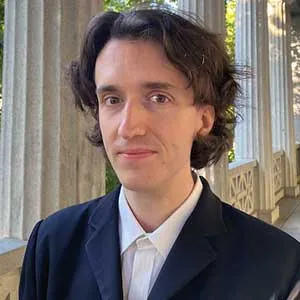
Emma (Tristan) Du Puy
Emma (Tristan)'s research stands at the intersection of environmental economics, empirical industrial organization and labor economics. In the work done during her graduate program, she has studied the joint economic surplus and environmental pollution consequences of European Union agricultural subsidies, costs of adaptation to climate change, the ecosystem consequences of the homogenization of U.S. agricultural landscapes, and the role of tacit skills in the U.S. migrant labor markets. During this postdoctoral fellowship, she wishes to extend her research on dynamic land use by developing a spatial model of farm dynamics to look at the environmental consequences of EU enlargements.
Work and Labor Lab

Shannon Potter
Shannon received her PhD from the University of Toronto’s Centre for Industrial Relations and Human Resources, and her MA in Economics from the University of British Columbia. Her research on labor and gender includes projects on collective bargaining (e.g. strikes, conflict and union revitalization, sexual harassment) and organizational practices and gender inequalities in the workplace (e.g. pay gap, motherhood penalty, knowledge management). Before joining Columbia, her postdoctoral work at Michigan State University’s School of Human Resources and Labor Relations examined the impact of algorithmic management technologies on hospitality workers.

Aiko Schmeisser
Aiko's research sits at the intersection of labor, political, and behavioral economics, focusing on the role of individuals’ preferences, beliefs, and identities in the labor market. His work has examined, for instance, how unionization affects employees' political ideologies, as revealed through their donations to U.S. political candidates. In ongoing work, he studies how workplace experiences impact political participation, how peer preferences can affect workers' job choices, how workers form beliefs about their labor market opportunities, and how the perception of social identities shapes disparities in the labor market. Throughout his projects, he employs large-scale observational data from multiple countries and applies rigorous quasi-experimental methods to identify causal relationships. Aiko received his PhD from the Berlin School of Economics in 2025 and visited Harvard University's Center for Labor and a Just Economy for a research stay in 2024. Please visit his website for more detailed information on his research.