Center selects 14 Recipients of 2025-2026 Faculty Grants
These awards will fund scholarship to advance our understanding of critical challenges at the intersection of politics, economics, and society.
The Center for Political Economy is pleased to announce the selection of 14 innovative research projects as recipients of its 2025-2026 faculty grants These awards will fund scholarship to advance our understanding of critical challenges at the intersection of politics, economics, and society.
Supporting Transformative Research
The Center's faculty grants are designed to foster intellectual discovery and collaboration by supporting the generation of new knowledge, facilitating the exchange of research findings, accelerating the identification of pressing challenges, and expanding methodological approaches across disciplines.
This year's recipients represent a diverse array of Columbia schools — including Public Health, Arts and Sciences, Business, Journalism, Architecture, and Barnard College — demonstrating the Center's commitment to interdisciplinary scholarship that transcends traditional academic boundaries.
The selected projects align with our cross-cutting theme of Political Economy and Democracy and three Idea Labs that mobilize intellectual resources around urgent contemporary issues:
Work and Labor Projects
Organizing Against Healthcare Corporatization
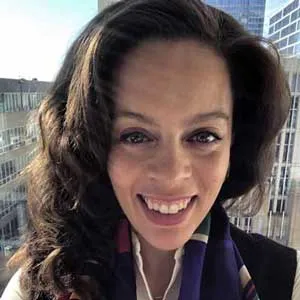
Sorcha Brophy
Assistant Professor of Health Policy and Management, Mailman School of Public Health
Sorcha’s project explores the dramatic rise in healthcare union mobilization in the US, occurring alongside the growing “problem” of healthcare corporatization, through a case study of “safe staffing” politics in Minnesota. Using ethnography and interviews with the Minnesota Nurses Association, lawmakers, hospital associations, and others, the research examines labor organizing and strategic engagement in the context of growing corporate power in U.S. healthcare.
Platform Economy and China’s Digital Working Class
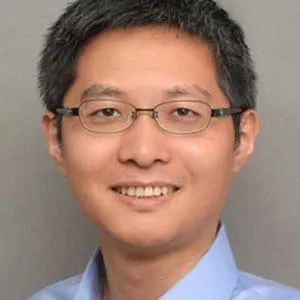
Junyan Jiang
Assistant Professor of Political Science, Columbia's Graduate School of Arts and Sciences
Juyan’s project explores how the proliferation of large online platforms has reshaped class politics, labor relations, and perceptions of justice. Focusing on China’s platform economy, the research examines how gig workers navigate algorithmic control, develop solidarity, and fight for lawful rights. Through interviews with workers, platform managers, and government regulators, along with dataset collection and a pilot survey on political and economic attitudes, the project offers new insights into the nature of class politics in a digital political economy.
Collaborators:
- Yao Lu, Professor, Columbia GSAS Sociology;
- Qin Gao, Professor, Columbia School of Social Work;
- Genia Kostka: Professor of Chinese Politics, Freie Universität Berlin;
- Tianguang Meng, Professor of Political Science, Tsinghua University;
- Lizhi Liu, Assistant Professor of Business, Georgetown University;
- Xiang Gao, Professor of Public Administration, Zhejiang University;
- Hao Wen, graduate student, Columbia School of Social Work; and
- Yaya Wang, graduate student, Columbia Weatherhead East Asian Institute
Political and Civic (Dis)Engagement of the College-Educated Working Class
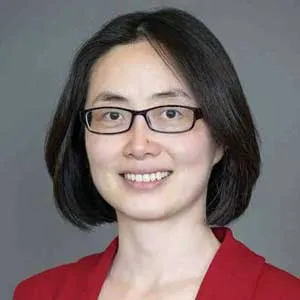
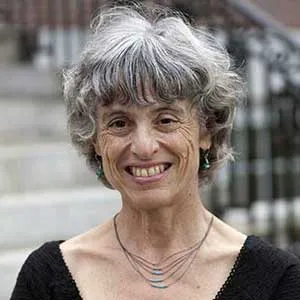
Yao Lu
Professor of Sociology, Columbia's Graduate School of Arts and Sciences
Yao’s project examines how rising unemployment and underemployment among college graduates in the United States are giving rise to a new college-educated working class, and how members of this group interpret and respond to economic insecurity and employment hardship in political and civic life. Using a mixed-methods approach, the team combines survey data with in-depth interviews to explore employment conditions, patterns of political and civic engagement, and the adaptive coping strategies of precariously employed graduates and comparison groups.
Collaborator:
- Ruth Milkman, Distinguished Professor of Sociology, CUNY School of Labor and Urban Studies and CUNY Graduate Center
Firms and Industrial Policy Projects
Critical Minerals and Backward Linkages: Evidence from 22 Million Firm-to-Firm Observations

Anja Benshaul-Tolonen
Associate Professor of Economics, Barnard College
Anja’s project investigates the economic risks and opportunities posed by Zambia’s push to expand copper production amid rising global demand. Using decade-long administrative VAT and mining data, the study maps backward linkages between copper mines and domestic firms, examines supplier integration and procurement behavior, and measures productivity spillovers, offering new insight into the political economy of resource dependence.

Collaborator:
- Paula Fernandez Musso, Development Economics Research Assistant, Barnard College
Anti-Monopoly and Democracy in the Political Economy of the United States from the War of Independence to Big Tech
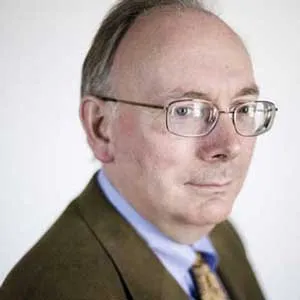
Richard John
Professor of History and Communications, Journalism School
Richard’s project offers the first archivally based history of anti-monopoly thought and practice in the U.S. from the War of Independence to the 1940s. Building on years of research, he develops a public-facing monograph that, like his previous works, aims to shape contemporary debates on economic regulation, political economy, and U.S. institutional history.
Political Economy of Climate Projects
From Disaster Capitalism to the Big Green State: State and Economy in the Age of Climate Change
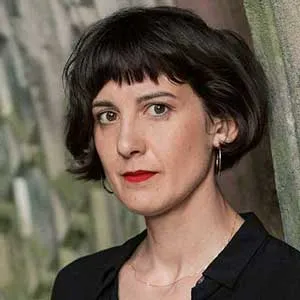
Alyssa Battistoni
Assistant Professor of Political Science, Barnard College
Alyssa’s project investigates the drivers of Western states’ shift from market-based climate policy to more interventionist green industrial policy. The project examines forces such as domestic climate movements, Chinese state investment, economic populism, and great power politics to clarify the present dimensions and likely future directions of climate politics as a lens on broader dynamics of capitalism.
Collaborators:
- Adam Tooze, Kathryn and Shelby Cullom Davis Professor of History, Columbia's Graduate School of Arts and Sciences;
- Thea Riofrancos, Associate Professor of Political Science, Providence College; Climate and Community Institute
Reclaiming Resilience: Housing and Climate Governance in Tourism-Driven Economies of the Caribbean
Hugo Sarmiento
Assistant Professor, Urban Planning Program, Columbia's Graduate School of Architecture, Planning, and Preservation
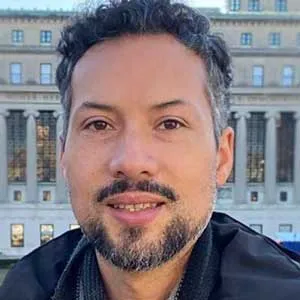
This project addresses climate adaptation gaps for frontline Caribbean communities facing housing vulnerability due to climate change, policy infrastructure, and tourism development. Professor Hugo Sarmiento, in collaboration with doctoral candidate Elizabeth Milagros Álvarez, will examine the cases of Cabarete, Dominican Republic, and Cartagena, Colombia. Drawing on both researchers' community-engaged fieldwork and political economy analysis, the project integrates ethnographic, spatial, and digital humanities methods to assess the impact of tourism-driven urbanization on housing and environmental governance.
Together, the team will develop a critical policy model that incorporates local-regional legal frameworks, with the goal of advancing access to decent housing, climate resilience, and democratic land governance rooted in social and environmental justice.
Collaborator:
- Elizabeth Milagros Alvarez, Doctoral Candidate, Urban Planning Program, Columbia's Graduate School of Architecture, Planning, and Preservation
Political Constraints and Bureaucratic Action in Environmental Governance

Gemma Dipoppa
Assistant Professor of Political Science, Columbia's Graduate School of Arts and Sciences
Gemma’s project investigates why illegal crop residue burning, a major cause of deadly air pollution in South Asia, persists despite public concern. Using satellite data and political records, the project analyzes politicians’ backgrounds, incentives, and actions through LLM models to understand enforcement dynamics. The research explores how electoral cycles and constituency traits affect pollution control, aiming to reveal why political pressure often fails and how bureaucratic institutions can effectively mitigate environmental harm.
Collaborators:
- Saad Gulzar, Assistant Professor of Politics and International Affairs, Princeton University;
- Annalisa Pezone, PhD Student, Political Science, New York University;
- Anzony Quispe, Research Assistant, Princeton University
Political Economy of Compensation in Fossil Fuel Economies
Nikhar Gaikwad
Assistant Professor of Political Science, Columbia's Graduate School of Arts and Sciences
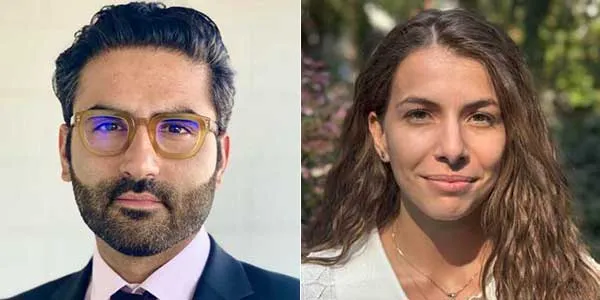
Nikhar and Jonathan’s project investigates how compensation influences economic transitions in fossil fuel communities in developing democracies. By applying bargaining theory, the project examines how stakeholder beliefs shape compensation processes through large-scale surveys of key actors in coal-producing regions.
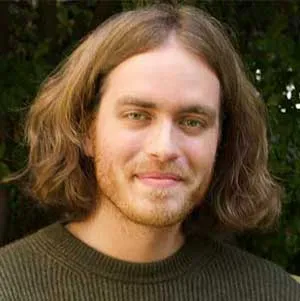
The project also collects local data on transitions and compensation to analyze their impact on timing and incidence, aiming to inform just, politically feasible coal transition plans and create publicly available datasets for further research.
Collaborator:
- Johnathan Guy, incoming Postdoctoral Research Scholar, Center for Political Economy
Political Economy and Democracy Projects
The Dynamics of Voter Information and Decision-Making: An AI-Driven Study of Electoral Preferences in the 2024 U.S. Presidential Election
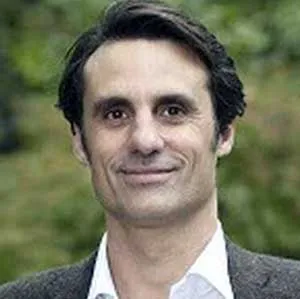
Andrea Prat
Richard Paul Richman Professor of Business, Economics Division, Business School; Professor of Economics, Graduate School of Arts and Sciences
Andrea’s project investigates how voter decision-making evolves in real time leading up to the 2024 U.S. presidential election, focusing on the reasoning process rather than just final outcomes. Leveraging AI and Large Language Models, the project analyzes open-ended responses and conducts interactive interviews to reveal patterns in voter reasoning and shifts in support.
Collaborators:
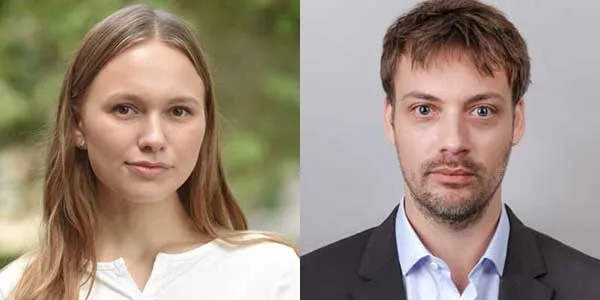
- Oksana Kuznetsova, Research Assistant, Columbia's Graduate School of Arts and Sciences (Economics);
- Charles Angelucci, Class of 1957 Career Development Professor and an Assistant Professor of Applied Economics, Sloan School of Management, MIT;
- Vincent Pons, Professor of Business, Government, and the International Economy Unit, Harvard Business School
Law, Labor and Reconstruction in the Local Courts, 1865-1876
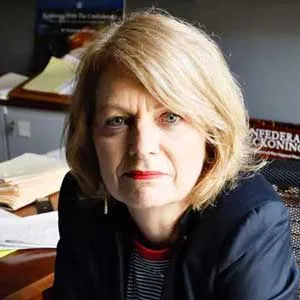
Stephanie McCurry
R. Gordon Hoxie Professor of American History in Honor of Dwight D. Eisenhower, Columbia's Graduate School of Arts and Sciences
Stephanie’s project investigates how criminal law functioned at the local level during Reconstruction in the United States (1865-76), focusing on the enforcement of laws as Black men gained political rights. By digitizing county trial records from three southern states, the project aims to uncover the realities of law in action, contribute to historical knowledge, and create a publicly accessible database to support further scholarship on this critical period in American democracy.
Collaborators:
- Sarah Seo, Michael I. Sovern Professor of Law, Columbia Law School;
- Kellen Funk, Michael E. Patterson Professor of Law, Columbia Law School
The Instability of Constraints on Capital
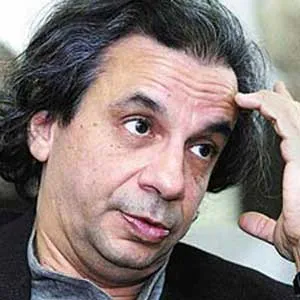
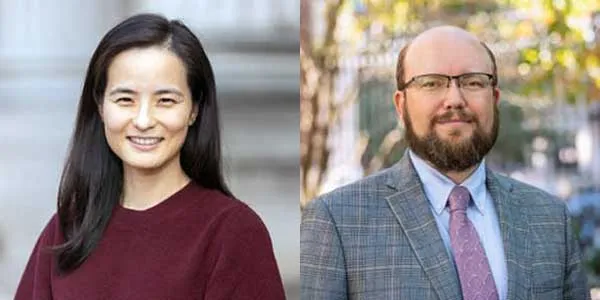
Akeel Bilgrami
Sidney Morgenbesser Professor of Philosophy, Columbia's Graduate School of Arts and Sciences
Akeel’s project investigates why the social democracies that emerged after World War II and the post- colonial ‘dirigiste’ progressive regime — with their broadly Keynesian efforts to constrain capital and provide safety nets — have proven so unstable. Bringing together economists, philosophers, political, and legal theorists in conferences and workshops, this project seeks a deep, cross-disciplinary diagnosis of this instability by examining capital’s recurrent tendencies to refuse to tolerate constraints placed upon it and the fragility of the political institutions, legal codes, and democratic dispositions that fall into line with these tendencies, while also seeking renewed political possibilities of resistance.
Quasi-Corruption in City Politics: Activist and Voter Beliefs
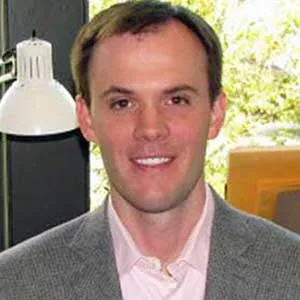
Justin Phillips
Eaton Professor of Political Science, Columbia's Graduate School of Arts and Sciences
Justin’s project investigates how legal but ethically questionable campaign practices—like large-dollar fundraising from unpopular sources—shape perceptions of corruption in New York City politics. By surveying both activists and the public, the study explores whether routine political behaviors contribute to declining trust. Launching after the 2025 primaries, the project seeks to uncover how “quasi-corruption” influences voter attitudes and elite-political dynamics in urban elections.
Collaborators:
- Daniel Markovits, Graduate Student, Columbia's Graduate School of Arts and Sciences (Political Science);
- Emma Swanson, Graduate Student, Columbia's Graduate School of Arts and Sciences (Political Science)
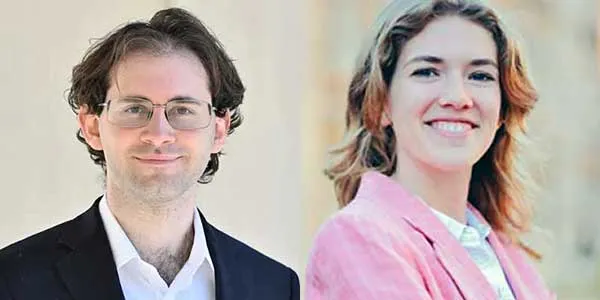
Second Bocconi-Columbia Conference on Political, Economic, and Social Inequalities
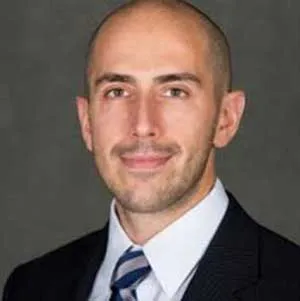
Carlo Prato
Associate Professor of Political Science, Columbia's Graduate School of Arts and Sciences
Carlo’s project is motivated by the evidence of widening differences across citizens in economic outcomes and political views. The past decades have witnessed a growing academic interest in the causes, consequences, and potential responses to political, economic, and social inequalities. To encourage the accumulation of knowledge in these areas, Carlo and his team started holding a yearly conference alternating between Bocconi University and Columbia University. The inaugural conference was held at Bocconi University in June 2025. Its second iteration will be held at Columbia in the Spring of 2026.
Collaborators:
- Shigeo Hirano, Professor of Political Science, Columbia's Graduate School of Arts and Sciences;
- Michael Ting, Professor of Political Science and International and Public Affairs, Columbia's School of International and Public Affairs/Graduate School of Arts and Sciences;
- Giovanna Invernizzi, Assistant Professor, Department of Social and Political Sciences, Bocconi University;
- Ala Alrababah, Assistant Professor, Department of Social and Political Sciences, Bocconi University